

Types of SBA Loans: A Guide for SME Lenders

We’ve already dealt with SBA loans in our previous article. Here, we’re returning to this topic to dive deeper into the three main types of SBA loans, the existing categories of SBA lending programs, and the nuances of borrower application screening. The latter point is vitally important for the design and selection of SME lending software, which should include all SBA-approved parameters for creditworthiness review and decision-making.
It’s hard to overestimate the role of SBA loans in the U.S. because they give access to finance to small and mid-sized businesses lacking traditional financing options. The Small Business Administration (SBA) is a federal agency that links such businesses with approved lenders to stimulate the development of SMBs, the bloodstream of the American economy.
This way, by joining the list of approved SBA lenders, any business can expand its customer base, improve its rating and trust, and get access to exclusive government-sponsored programs and privileges.
This guide will walk you through all SBA loan options and requirements to inform your SBA loan software selection and application process. ABLE Platform™ is also ready to become your trusted provider of automated loan underwriting solutions to simplify your entry into the SBA lending industry.
Types of SBA Loans

Here is a detailed breakdown of each SBA small business loan program, with eligibility and documentation requirements.
7(a) Loans
Borrowers can apply for one of the several 7(a) loan options depending on the business purpose:
- Standard 7(a) loan covers up to $5 million for 10 years (as working capital) and 25 years (for real estate purchase). The documents required from the borrower include personal and business financial statements, business tax returns for the past 3 years, a debt schedule (for debt refinancing purposes), and a business plan.
- 7(a) small loan covers loans for up to $500,000 for small projects and contingent financial needs. The review process is quicker than for the standard 7(a) loan, and fewer documents are needed: personal and business financial statements, tax returns (past 3 years), and a business plan.
- Express loan — a commercial loan under $500,000 with expedited funding and a minimal review process (traditionally up to 36 hours). The loan’s duration is up to 10 years, with SBA covering 50% of the sum. Documentation requirements are the same as for standard 7(a) loans.
- Export Express loan is available for export businesses with a minimum of one year of business operations. It’s also capped at $500,000 and can be given for up to 7 years. The SBA review process is fast, with a response typically given within 24 hours. The borrower should submit an export business plan, financial statements, and business/personal tax return documentation for review.
- Export Working Capital Loan (EWCP) may be used to finance working capital for export sales. The loan is capped at $5 million, and its maximum duration is 3 years. The documentation package is the same as for the Export Express loan.
- International Trade Loan (ITL) is a long-term funding loan for up to $5 million for export sales. Its duration is up to 25 years. The borrower should submit an international expansion plan for their business, along with tax returns (past 3 years) and financial statements.
- CAPlines is an option for businesses needing finance for their revolving or short-term working capital. It is optimal for companies with seasonal workloads and cash flow fluctuations. The loan is capped at $5 million and can be given for up to 10 years. Documentation requirements are the same as for other 7(a) loans, and the borrower can choose to apply for Seasonal (businesses with seasonal fluctuations), Contract (contract fulfilling companies), Builders (construction businesses), and Working (businesses with general working capital needs) CAPLine loans, depending on their business registration.
504 Loans
The SBA 504 loan program is meant to provide long-term financing to businesses for purchases of equipment, land, or commercial real estate. SBA 504 loan rates are fixed to relieve the burden of debt and give predictability in loan repayment to businesses.
This financing option is available only to borrowers applying via SBA Certified Development Companies with a clear, transparent mission statement and a community focus on business operations. The loan may cover up to $5.5 million per project, with a duration from 10 to 25 years.
As a rule, the structure of 504 loans is as follows: 50% is given out by a private lender, 40% is covered by the CDC, and the remaining 10% comes from the borrower’s down payment. The documents required from the borrower include:
- Personal and business documents. Individual and business tax return statements for the past 3 years, all relevant business financial statements (e.g., cash flow, income statement, and balance sheet data), and personal financial statements (applicable to beneficial owners with a 20%+ share of the business).
- Loan-related documents. The borrower should present a consistent business expansion plan, the purchase agreement for real estate, and the list of equipment with prices (if the loan is meant for equipment purchases). Some lenders may also request a formal appraisal of property and assets owned by the business.
Microloans
A microloan is capped at $50,000; it may be issued to a startup, SME, or non-profit childcare provider. The microloan may be used as working capital or finance inventory, equipment, or supplies purchases. Compared to 7(a) and 504 loans given for 10-25 years, a microloan repayment period can’t exceed 6 years, with the interest rate ranging from 8% to 13%.
The scheme of microloan disbursal works a bit differently compared to 7(a) and 504 loans. These loans are allocated by SBA and issued by certified intermediary lenders who oversee the process of loan servicing. Documents required from a borrower include:
- Business and personal financial details. Tax return documents (individual and business) for the past 3 years, financial statements, and personal financial statements.
- Business-related information. A detailed business plan, data about business registration and licensing, and the statement of planned use of loan funds.
Separate categories within the microloan type of SBA-supported loans are disaster assistance and community advantage loan programs. The former assist applicants to recover from natural disasters and economic crises, while the latter are specifically targeted at underserved, disadvantaged communities.
E-Tran System Review
SBA lenders use the E-Tran platform for a unified review of loan applications. It enables fast and compliant submission, review, and tracking of all SBA loan applications, thus ensuring faster loan approval via extensive automation. Lenders can join the E-Tran system to screen applicants for eligibility, upload and store related documents, and track the application’s progress in real-time.
Requirements for SBA Loan Programs: Lenders & Borrowers
So, how to get an SBA loan if you’re a small business in the U.S.? How to be approved by the SBA as an authorized lender? Here are the main SBA loan requirements for both sides of the lending process.
SBA Loan Eligibility Criteria for Borrowers
To reap the benefits of SBA loans, borrowers have to comply with a certain set of parameters for every SBA lending program type.
7(a) loan eligibility requirements are:
- Registration as a for-profit organization.
- Compliance with the SBA definition of SMEs.
- Business operations within the U.S. territory.
- Evidence of financial need.
- Creditworthiness and ability to repay the loan.
- Exhausted funding opportunities.
- A minimum FICO score of 650.
In addition, various SBA partnering lenders set specific requirements for borrowers in terms of the minimum number of years in business, their credit score, and annual revenue estimates. Thus, it makes sense to do some research on the eligibility criteria before applying.
The SBA 504 loan requirements include:
- A minimum FICO score of 680.
- 10% down payment for the asset purchase.
- Creditworthiness and ability to repay the loan.
- Qualified management expertise on board.
- Tangible assets worth no more than $15 million.
- Average net income not more than $5 million for the past two years (after federal income tax withholdings).
The requirements for participation in the SBA microloan program are:
- A FICO score of 620 (loans may be given to a business (business owner) with a score of 600, and non-profit childcare centers have even softer FICO score requirements).
- Collateral is required in some cases.
- There is no requirement for a minimum number of years in business.
- Proof of responsible lender status and ability to repay the loan.
- A positive cash flow forecast for the borrowing business.
- A sustainable business idea (a detailed business plan may be required).
Requirements for Lenders
Lending businesses wishing to become SBA partners also have to meet specific requirements for every loan category. The 7(a) loan eligibility criteria are:
- Evidence of the company’s ability to execute effective loan origination and servicing.
- Openness for the public in terms of loan issuance.
- Good character and business reputation in compliance with ethical requirements in 13 CFR Part 120.140.
- Supervision by SBA-approved regular authority.
There are some differences in lender qualifications for the SBA 504 loan vs 7a loan provision. Lenders should comply with the following criteria:
- Evidence of the company’s ability to execute effective loan origination and servicing.
- Openness for the public in terms of loan issuance.
- Good character and business reputation in compliance with ethical requirements in 13 CFR Part 120.140.
- Supervision by SBA-approved regular authority.
There are some differences in lender qualifications for the SBA 504 loan vs 7a loan provision. Lenders should comply with the following criteria:
- Operation as a for-profit corporation in good standing.
- A board of directors with a minimum of 9 voting directors (in compliance with 13 CFR 120.823).
- Availability of full-time management and staff.
- Evidence of a minimum level of lending activity.
Microloans are primarily allocated by the SBA and issued to the public with the help of intermediary lenders. To become one, you need to meet the following parameters:
- 1+ years of experience in microloan origination and servicing.
- 1+ years of experience in in-house marketing, management, and technical support of micro-level borrower population.
- Business registration as a non-profit, quasi-public, or tribally owned company.
Key Factors Lenders Should Consider When Choosing a Lending Software Provider
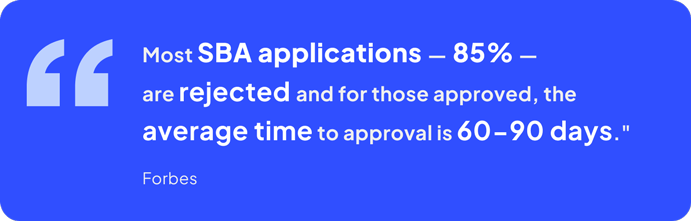
The main goal of choosing efficient and robust SBA loan servicing software is to simplify and speed up the SBA loan application process. That’s why a lending business targeting SBA qualification should give proper regard to the software provider’s selection in line with the following parameters:
- Ease of use. An intuitive and user-friendly interface is a plus for both the lender and the borrower. Easy navigation makes collaboration and application processing fast and easy without the need to hire staff with specialized knowledge or invest in lengthy team training.
- Automation and integrations. The more automated the software is, the better, as it saves vital processing time. Besides, every lending business wants to be a part of the broader financial ecosystem, which should be made possible via simple API integrations.
- Seamless upgrades. Most lenders start using software when they are small startups, but each company needs latitude to grow and develop. That’s why it makes sense to choose scalable software that upgrades without technical friction and downtime.
- Regular updates. It’s safer to opt for regularly updated software that will develop along with the financial market and tech infrastructure, giving you the needed safety and operational efficiency.
Key Features of SBA Loan Software
Contemporary SBA loan software should serve the interests of lenders and borrowers in terms of ensuring the speed and accuracy of application processing, loan origination, and the loan’s servicing across its lifecycle. The main parameters that distinguish effective software solutions are as follows:
- Automated applications. Your software system should enable electronic application submission and documentation management. Applicants will upload their identifying documents and financial statements via a secure portal to enjoy data safety and fast application processing.
- Robust eligibility assessment. Your software should be able to perform fast and automated checks of the applicant’s data against SBA requirements and broader loan eligibility criteria. The process should be arranged with consistency and fairness to ensure equal access to SBA financing for all eligible applicants.
- Smart creditworthiness evaluation. Modern software systems perform in-depth financial analyses of the applicants’ income statements and balance sheets to issue accurate cash flow projections. This data informs the loan decision by shedding light on the business’s financial health and the risk of loan non-repayment.
- Streamlined communication. Effective loan processing software should enable fast and effective digital communication between the lender and the borrower. It also comes with a variety of internal tools for task management and loan servicing tracking on the lender team’s side.
Benefits of SBA Loan Software
By using robust software systems for SBA business loan origination, you can enjoy a wide range of tangible advantages.
- Time savings. Smart software solutions remove manual data entry from application processing and speed up the turnaround of loan decision-making. Impressive time efficiency achieved via quick and effective electronic communication between the lender and the borrower contributes to service improvement.
- Accuracy and compliance. SBA software operates based on the in-built compliance rules and performs automated error checks in the process of document verification. Therefore, the speed of loan processing is achieved without accuracy compromises, ensuring continuous compliance with SBA standards and state regulations.
- Stellar customer experience. Intuitive UI, transparency throughout application processing, real-time communication on all matters, and quick decisions improve customer experience and increase user trust in the lenders’ reliability.
Join the SBA Lender List with Trusted Partners Today
As you can see, robust and efficient loan servicing software is your door to the world of smooth and profitable operations in the U.S. lending market. Explore the lucrative and beneficial SBA partnership with the help of tried and tested solutions from ABLE™ Platform and enjoy streamlined processes, full customization, and customer trust.
FAQ
